Cute Pumpkin with Bow 2
A Designer’s First Glance: Charm Without Clutter
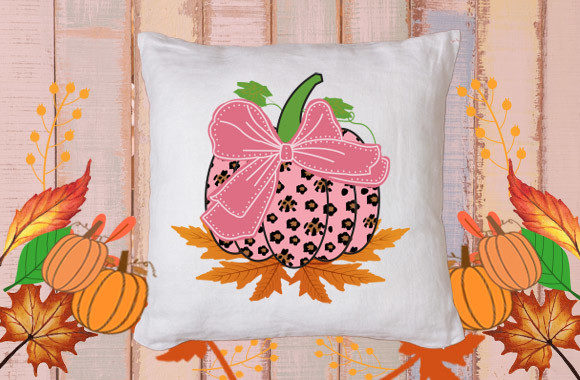
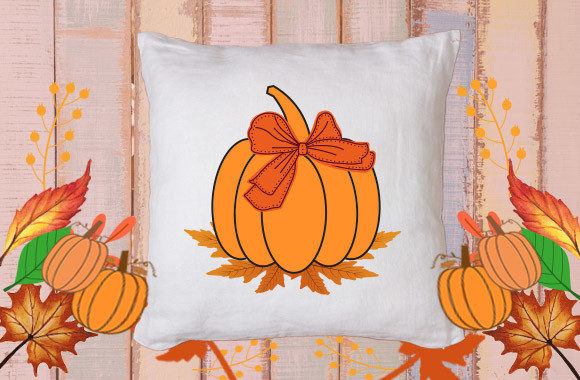
When I opened Cute Pumpkin with Bow 2, my first thought wasn’t “Oh, it’s a pumpkin”—it was “This feels like a finished product already.” The shape is rounded and friendly, the bow sits just off-center with gentle asymmetry, and the stem has subtle curvature—not stiff, not fussy. It reads as cheerful but not childish, seasonal but not dated. As a machine embroidery design, it avoids over-detailing: no tiny veins on the pumpkin, no intricate bow loops that would vanish in satin stitch. That restraint is intentional—and smart. It means Cute Pumpkin with Bow 2 lands cleanly on fabric without fighting thread tension or stabilizer limitations.
Real-World Test: Embroidering a Holiday Tote for a Local Boutique
Last week, I used Cute Pumpkin with Bow 2 to embroider a set of organic cotton tote bags for a small shop launching their fall collection. We stitched it centered on the front panel—3.2” wide—on medium-weight canvas with tear-away + light cut-away stabilizer. The result? Crisp edges, smooth satin-stitched bow loops, and a fill-stitch pumpkin body that held texture without puffing. Customers responded immediately: “It looks handmade, not mass-produced,” one said. That’s the quiet strength of this design—it supports the story of a thoughtful, small-batch craft business without demanding perfection from the embroiderer.
Where It Shines (and Where It Needs Care)
Cute Pumpkin with Bow 2 works beautifully on:
- Custom apparel: Sweatshirts, crewneck tees, and lightweight hoodies—especially when placed on left chest or center back. The balanced proportions avoid distortion on knit fabrics.
- Baby embroidery: On gauzy swaddle blankets or cotton onesies, its clean lines read clearly even at 2.5” scale. No fine interior details get lost.
- Embroidered patch: Digitized well for peel-and-stick or sew-on backing. The bow’s outer edge stays defined, critical for crisp patch edges.
- Holiday embroidery: Perfect for tea towels, pillow covers, and aprons—items that see frequent washing. Its moderate stitch density holds up without excessive thread buildup.
- Digital embroidery file users will appreciate how easily it scales for printable mockups. The SVG and EPS files retain clean vectors for branding consistency across Etsy listings or social previews.
But it’s not universal. Use caution with:
- Small hoop sizes under 4”: While scalable, shrinking below 2” risks losing bow definition—those curved loops rely on minimum stitch length to read as shape, not noise.
- Textured or napped fabrics like terry cloth or heavy fleece: The pumpkin’s smooth silhouette can blur slightly; test with extra stabilizer and reduced top tension.
- Stretchy fabric (e.g., ribbed knits or performance blends): Hoop tightly and use adhesive stabilizer—this design’s clean curves show every wobble if the base shifts mid-stitch.
- Dark fabric without contrast testing: The bow’s inner shadow detail is subtle. On navy or charcoal, verify thread color contrast before bulk stitching—what reads as dimension on white may disappear entirely.
Design Integrity Meets Commercial Practicality
As a craft business owner or Etsy seller, you’re not just buying a graphic—you’re buying trust. When a customer orders a personalized gift with Cute Pumpkin with Bow 2, they’re expecting warmth, clarity, and that unmistakable handmade polish. This design delivers that because it respects embroidery’s physical limits: no over-stitched stems, no dense fill zones that cause puckering, no running-stitch outlines so thin they fray after three washes. It elevates the finished product without asking more from your machine or your time.
It also supports brand consistency. Whether you’re using it on a holiday kitchen towel line or as part of a curated baby gift set, Cute Pumpkin with Bow 2 reads as intentional—not clip-art repurposed. That perception matters. Buyers engage longer with products that feel designed, not assembled.
What Every Embroidery Designer Should Do Before Stitching
Even with a strong design like Cute Pumpkin with Bow 2, skip these steps at your own risk:
- Test on scrap fabric first—same type, same stabilizer, same thread colors you’ll use for production.
- Check thread color contrast in natural light and under store lighting. A soft peach thread might glow on cream linen but fade on oatmeal canvas.
- Review stitch density visually in your embroidery software. Look for tight clusters near the bow knot—if present, consider slight digitizing tweaks or alternate thread weight.
- Confirm hoop size compatibility for your intended placement (e.g., cap front vs. tote center). If using it commercially, verify licensing permits resale of finished items—Cute Pumpkin with Bow 2 is listed for Crafts and Graphics use, but always double-check scope.
- Inspect small details at 200% zoom: Are bow loops fully closed? Is the stem attached cleanly? These are easy fixes pre-stitch, costly reworks post-stitch.
- Test black-and-white mockups. If it reads strongly in grayscale, it’ll hold up across fabric colors and lighting conditions.
Final Thought: Not Just a Graphic—A Reliable Design Asset
Cute Pumpkin with Bow 2 isn’t flashy. It doesn’t try to be the most detailed or technically ambitious pumpkin out there. Instead, it’s the kind of embroidery file you keep in your “go-to” folder—the one you reach for when a client needs a warm, recognizable, seasonally appropriate touch that stitches reliably, sells consistently, and makes your handmade product feel quietly professional. For small shop owners, Etsy sellers, and embroidery designers who value clarity over clutter, it’s less of a decoration and more of a dependable tool. And in craft business, that kind of reliability is rare—and worth every stitch.